
Branding Agency Bangalore: What Founders Should Know Before Hiring One
Branding gets treated as the easy part of building a startup. A logo, some colours, a tagline, done in a weekend with a freelancer or a logo generator tool. Then six months later the same founders are explaining to investors why their brand looks inconsistent across the website, pitch deck, and product, and why nobody remembers the company name after a single meeting.

Design Decisions Shape App Performance.
Branding is not decoration. It's the compressed signal that tells someone, in under three seconds, whether your company is credible, what category you're playing in, and whether they should pay attention. Getting it wrong is expensive precisely because it's invisible until it's already costing you opportunities. This is a practical guide for founders evaluating branding work in Bangalore, what it actually involves, and what separates branding that compounds value from branding that's just a pretty logo.
Table of Content


What Branding Actually Includes
Branding is often reduced to a logo in founder conversations. A complete branding engagement covers considerably more.
Strategy- Before any visual work, a real branding process defines positioning: who you serve, what you stand for, and how you're different from the three competitors a prospect will inevitably compare you against. This is the part most rushed branding projects skip entirely, and it's the part that determines whether the visual identity actually means anything.
Visual identity- Logo, colour palette, typography, iconography, and the rules that govern how these elements combine. A good visual identity system isn't just a logo file. It's a flexible system that works across a website, a pitch deck, a product UI, social media, and printed collateral without looking inconsistent or requiring constant ad-hoc decisions.
Voice and messaging- How the brand talks. This includes tone (formal vs conversational, technical vs accessible), core messaging pillars, and a tagline if relevant. This is frequently neglected in branding engagements that focus purely on visuals, and it shows up later as inconsistent copy across the website, emails, and sales materials.
Brand guidelines- The reference document that lets anyone, internal team or external vendor, apply the brand correctly without having to ask. Good guidelines cover logo usage and misuse, colour codes, typography hierarchy, photography or illustration style, and voice examples.
Why Branding Matters More for Funded Startups
Founders sometimes assume branding matters more for consumer companies than for B2B or enterprise products. The opposite is often true for funded startups specifically. A startup raising a Series A is asking enterprise buyers, investors, and senior hires to take a bet on a company that, in most cases, doesn't have years of track record to lean on. Visual and verbal consistency is one of the few signals available to communicate "this team executes carefully" before anyone has used the product or seen the financials. We've seen this directly in our work with Gamma, an AI presentation tool that scaled fast in a crowded category. Part of what made the product trustworthy to new users in the first thirty seconds was a visual identity that felt deliberate and considered, not assembled from templates. That impression of care extends to how people judge the product itself, even before they've used a single feature.
How Branding Differs From a Logo Project
The most common mismatch between what founders expect and what they need is treating branding as a logo deliverable rather than a strategic exercise. A logo project takes a brief, produces three concepts, and delivers a final mark in a few formats. This is fast, relatively inexpensive, and appropriate when you already have clear positioning and just need an updated visual mark. A branding project starts earlier. It involves understanding your market, your competitors, your actual differentiation, and translating that into a coherent system, of which the logo is one output among many. This takes longer, costs more, but produces something durable: asystem that supports the company as it grows, rather than a mark that needs to be redone the moment the company's positioning shifts. Most early-stage founders need the second one, even when they ask for the first.
What to Expect From a Branding Engagement Timeline
A proper branding engagement typically runs 6 to 10 weeks, depending on the depth of strategy work required. The first two weeks cover discovery: understanding the business, the market, the competitive landscape, and conducting stakeholder interviews to surface what the founding team actually believes the company stands for, which is often different from what they initially say in a brief. Weeks three and four move into concept development, typically producing two to three distinct creative directions rather than a single option. This divergent phase is where the strategic thinking gets translated into visual language, and seeing multiple directions side by side helps founders make a more informed decision than reacting to a single proposal.
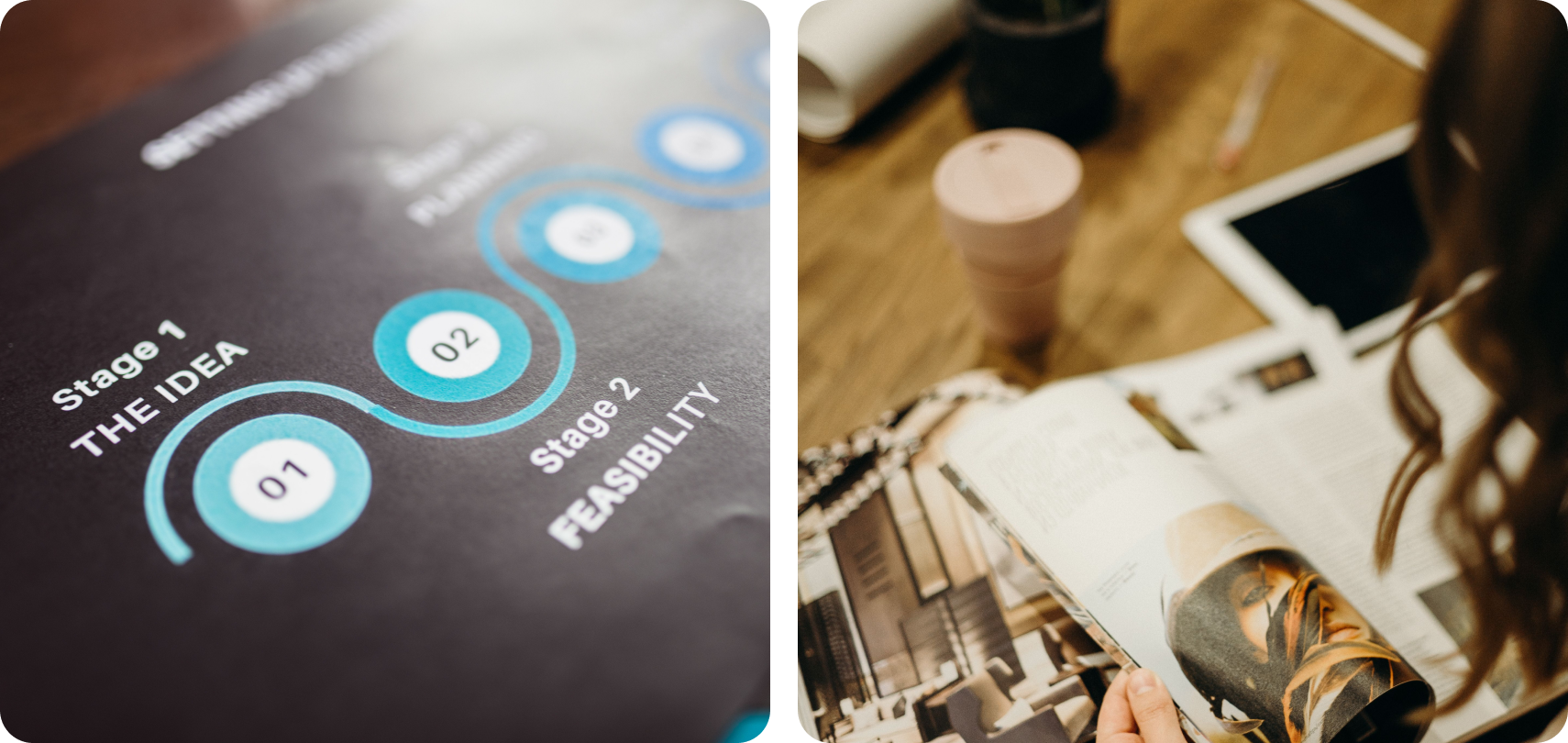
Weeks five and six refine the selected direction: finalising the logo system, building out the full colour and typography system, and beginning to apply the identity across real touch points like the website and product UI to stress-test how it holds up in practice. The final weeks produce brand guidelines and a full asset handoff package, ready for the team and any future vendors to apply consistently.

Common Branding Mistakes Startups Make
Designing for the founder's taste instead of the target buyer- Founders often have strong personal aesthetic preferences that don't match what their actual buyer responds to. A fintech product targeting conservative enterprise buyers needs a different visual language than a consumer social app targeting Gen Z, regardless of what the founder personally finds appealing.
Skipping competitive research- Without understanding what competitors look like, it's easy to land on a visual identity that blends in rather than stands out, or worse, looks confusingly similar to an established player in the category.
Treating brand guidelines as optional- Without documented guidelines, every new hire, freelancer, or vendor makes their own interpretation of the brand. Within a year, the visual identity has drifted significantly from the original system, and nobody can point to exactly when or how.
Rebranding too early or too often- Branding takes time to build recognition. Startups that rebrand every twelve months because of founder fatigue with the current look reset that recognition clock each time, which is particularly costly for companies trying to build category awareness.
Choosing trend-driven visual styles over durable ones- Visual trends in branding move quickly, gradient mesh backgrounds one year, brutalist minimalism the next. A brand built too tightly around a current trend ages poorly within two to three years and forces a premature rebrand. The most durable identities use trend-aware execution within a strategically sound, less trend-dependent foundation.
How Much Does Branding Cost in Bangalore
Pricing varies widely depending on agency tier and scope, which is part of why founders find it hard to evaluate quotes against each other. A logo-only project from a freelancer or small studio typically runs ₹ 15,000 to ₹ 75,000, with limited or no strategy work involved.
This is appropriate only if you already have clear positioning and need a fast visual refresh. A full branding engagement, including strategy, visual identity, voice and messaging, and brand guidelines, from a mid-tier studio in Bangalore typically runs ₹ 2 to ₹ 6 lakhs. This is the right range for most funded seed and pre-Series A startups establishing their identity for the first time or doing a meaningful rebrand. Enterprise-level branding engagements, often involving multiple stakeholder rounds, market research, and rollout across complex multi-product portfolios, run considerably higher and are scoped individually based on the breadth of the rollout.
The honest advice here is to be wary of branding quotes significantly below ₹ 1 lakh that claim to include strategy work. At that price point, the strategy phase is usually a single call rather than genuine research, and the resulting identity reflects that shortcut.
How to Brief a Branding Agency Effectively
The quality of branding output is directly tied to the quality of the brief. A vague brief like "modern and clean, but also bold" produces generic results because it gives the studio nothing specific to differentiate against.
A strong brief includes a clear description of who the target buyer or user actually is, not a demographic but a specific decision-making context.It includes three to five direct or aspirational competitors with notes on what you like and don't like about each of their identities. It includes any nonnegotiable, such as an existing colour the founding team feels strongly about, or a tone that absolutely must come through.
And it includes the business context: what stage you're at, what's coming next (a fundraise, a product launch, an enterprise push), since this shapes how durable and flexible the identity needs to be. The agencies that ask the most pointed follow-up questions to your brief are usually the ones who will produce the most differentiated work, because they're trying to find the specific angle rather than defaulting to safe, generic choices.
Signs a Branding Project Is Going Well (or Poorly)
A few signals during the engagement itself indicate whether the work is heading in a useful direction. Good signs: the agency pushes back on requests that contradict the strategy already agreed upon, rather than simply implementing whatever is asked. Concepts presented come with clear rationale tied back to the brief, not just aesthetic preference.
Revisions are handled in structured rounds with documented reasoning, not endless incremental tweaks that erodethe original concept's coherence. Warning signs: every round of feedback is implemented literally without any pushback, even when it contradicts earlier decisions. Concepts are presented without explanation of the thinking behind them. The process feels like the agency is guessing what you want rather than applying a clear strategic point of view. If you find yourself directing every decision, you're not getting the benefit of an experienced studio's judgment, and you might as well be doing it in-house.
The strongest brand experiences we build are the ones where branding and product design aren't treated as separate workstreams. The same colour system, typography, and voice that show up in the marketing site and pitch deck should extend into the product UI itself.This sounds obvious but is frequently ignored, particularly when a startup hires a branding agency for the website and a separate product design team for the app, with no shared design tokens or brand guidelines connecting the two.
The result is a company that looks like two different businesses depending on whether you're looking at the marketing site or using the product. We work on both branding and product design specifically because of this. When the samestudio handles the brand identity and the product UI, the visual and verbal language stays consistent across every touchpoint a user or buyer encounters, which compounds trust rather than fragmenting it.
Latest Articles

Fast-Turnaround Design Agency for Startups: How It Actually Works
Startups searching for a "fast-turnaround design agency" are usually under real pressure: a fundraise deadline, a launch date already announced, a competitor moving into the same space. Speed is not a nice-to-have in these moments. It's the entire ask.
Latest Articles
Mobile UX Trends in 2026: W hat's Actually Changing (and What's Just Noise)
Every year, the same list circulates: dark mode, gestures, micro-animations, personalisation. Most of it is either already standard or too surface-level to act on.
Latest Articles
What UX Features Do Users Expect From Apps in 2026?
Explore the emerging UX features transforming mobile and web applications, helping businesses create faster, smarter, and more engaging digital experiences.
Latest Articles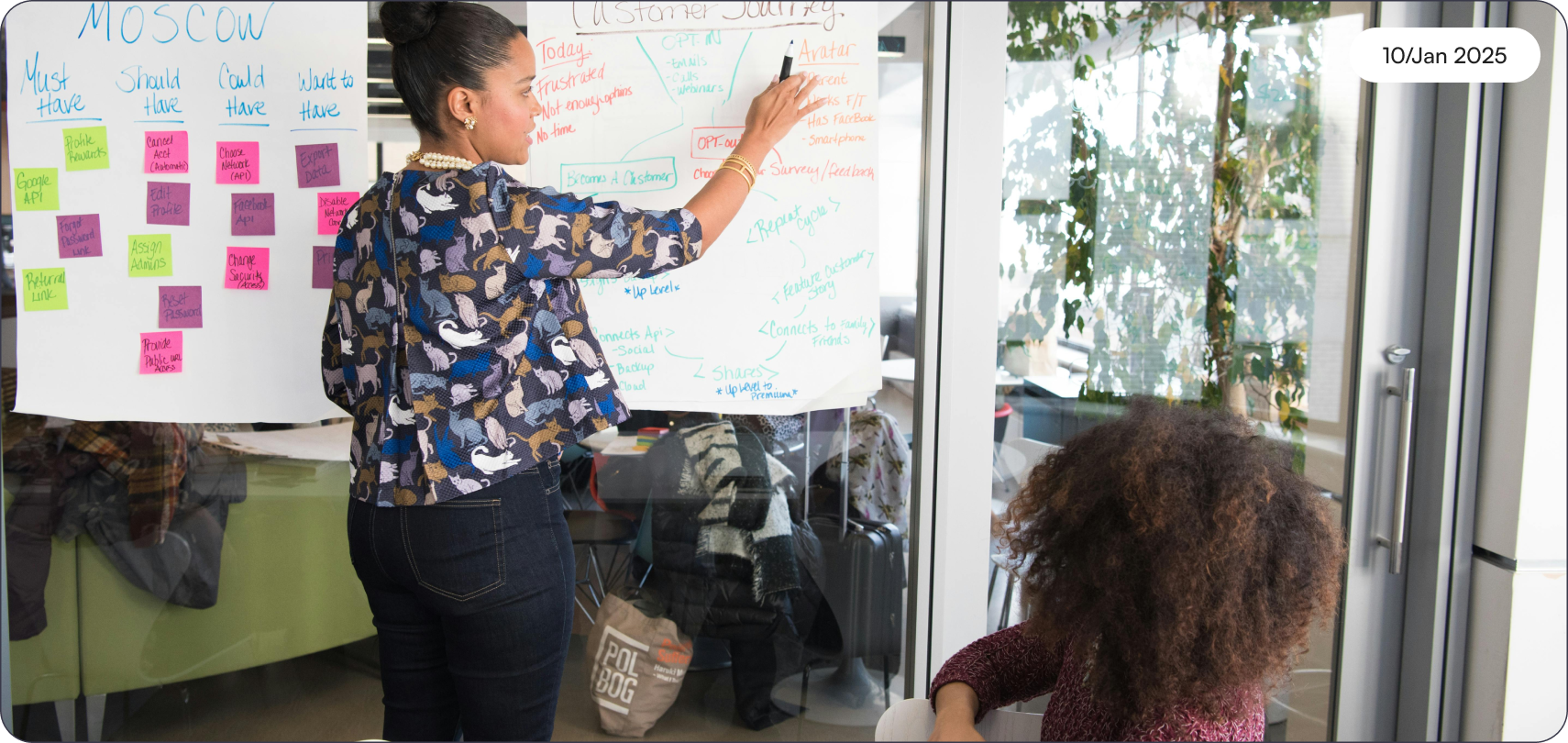
How Can Startups Optimise Their UX Strategy
Dive into the world of UX Strategy tailored for startups in Bangalore. Find out how great UX impacts brands and drives growth in Startup India and USA.
Latest Articles
How to Choose a UI/UX Design Agency in India
If you're searching for a UI/UX design agency in India, you're probably already comparing portfolios, reading case studies, and trying to figure out whether the quality you're seeing is repeatable or was a one-off effort for a big client.
Latest Articles
Design Systems 101: Building UI That Truly Scales
Discover how to create effective design systems for Figma. Enhance your UX with reusable components and streamline your workflow using Figma components.
Latest Articles
How to Design for AI - 101: Essential Tips and Tricks
Discover essential tips in our guide on How to Design for AI - 101. Learn the fundamentals and best practices for creating effective AI-driven designs.
Latest Articles
Design Trends 2026 Modern Ideas for Brands
Explore design trends 2026 shaping modern brands. Learn about AI, minimal design, bold typography, motion design, and sustainable strategies.
Latest ArticlesAbout Author:


Why choose Pen on Paper for future-ready design?

Got a question?
Get your answer

Ready to build AI-powered digital experiences?
Lorem ipsum dolor sit amet, consectetur adipiscing elit. Nunc vulputate libero et velit interdum.